
Kaiser Permanente – Nonprofit Structure
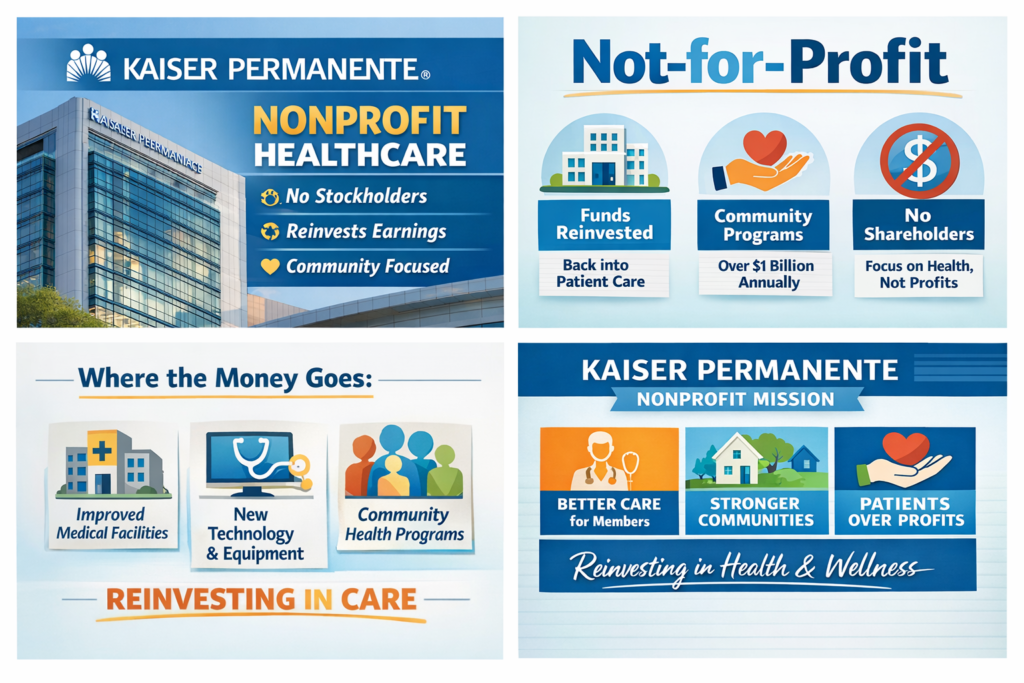
Kaiser Permanente is primarily structured as a not-for-profit organization, which sets it apart from most large healthcare providers in the United States. Unlike for-profit healthcare companies that distribute profits to shareholders, Kaiser Permanente reinvests surplus revenues back into the organization to improve patient care, expand services, and strengthen community health initiatives.
1. How the Nonprofit Model Works
- Revenue Generation
Kaiser Permanente collects payments from its members through premiums, co-pays, and deductibles. This revenue supports the operation of hospitals, clinics, physician groups, and support services. - No Shareholders
Because it is a nonprofit, Kaiser Permanente does not have private owners or shareholders demanding profit. This allows the organization to focus on quality of care rather than maximizing profits. - Reinvestment in Services
Any surplus income is directed toward:- Expanding medical facilities and services
- Investing in technology, such as electronic health records and telehealth systems
- Community health programs addressing social determinants of health
- Employee training and workforce development
This reinvestment model helps maintain high-quality healthcare while controlling costs for members.
2. Advantages of the Nonprofit Structure
- Patient-Centered Care: Since the focus is on improving health outcomes rather than profit margins, care decisions prioritize long-term patient well-being.
- Community Investment: Kaiser can dedicate significant funds to public health initiatives, preventive care, and underserved populations. Over $1 billion annually is invested in community programs, which is possible because profits are not distributed externally.
- Integrated Care Model Support: The nonprofit model complements Kaiser’s integrated healthcare system. It allows coordination between insurance, hospitals, and physicians without conflicting financial incentives.
- Affordability and Predictability: With no shareholders to satisfy, Kaiser can often offer more stable premiums and lower out-of-pocket costs compared to for-profit insurers.
3. Limitations and Considerations
While the nonprofit model offers many advantages, there are some considerations:
- Growth Constraints: Nonprofits rely on revenue reinvestment rather than capital from investors, which may limit rapid expansion compared to for-profit competitors.
- Regional Limitations: Nonprofit healthcare organizations like Kaiser often focus on specific regions, which can limit access for people outside their service areas.
- Competitive Pressure: They still compete with for-profit hospitals and insurers, which sometimes leads to balancing cost management with community-oriented care.
4. Why It Matters
Kaiser Permanente’s nonprofit structure is a core part of its identity and reputation. It enables the organization to:
- Prioritize quality over profit
- Invest in preventive care and community health
- Maintain an integrated healthcare model that benefits patients and staff alike
- Operate as a socially responsible organization that reinvests in public well-being
This structure is often cited as a model for sustainable, patient-focused healthcare in the U.S., contrasting sharply with profit-driven insurers and hospital systems.
